
Blue People
Jan 14, 2026
Web Design
Designing for the Chaos: Why Your 2026 Website Must Be an 'Experience Platform,' Not a Funnel
Stop building websites and start architecting platforms. In 2026, customers don't follow a path, they inhabit a network.
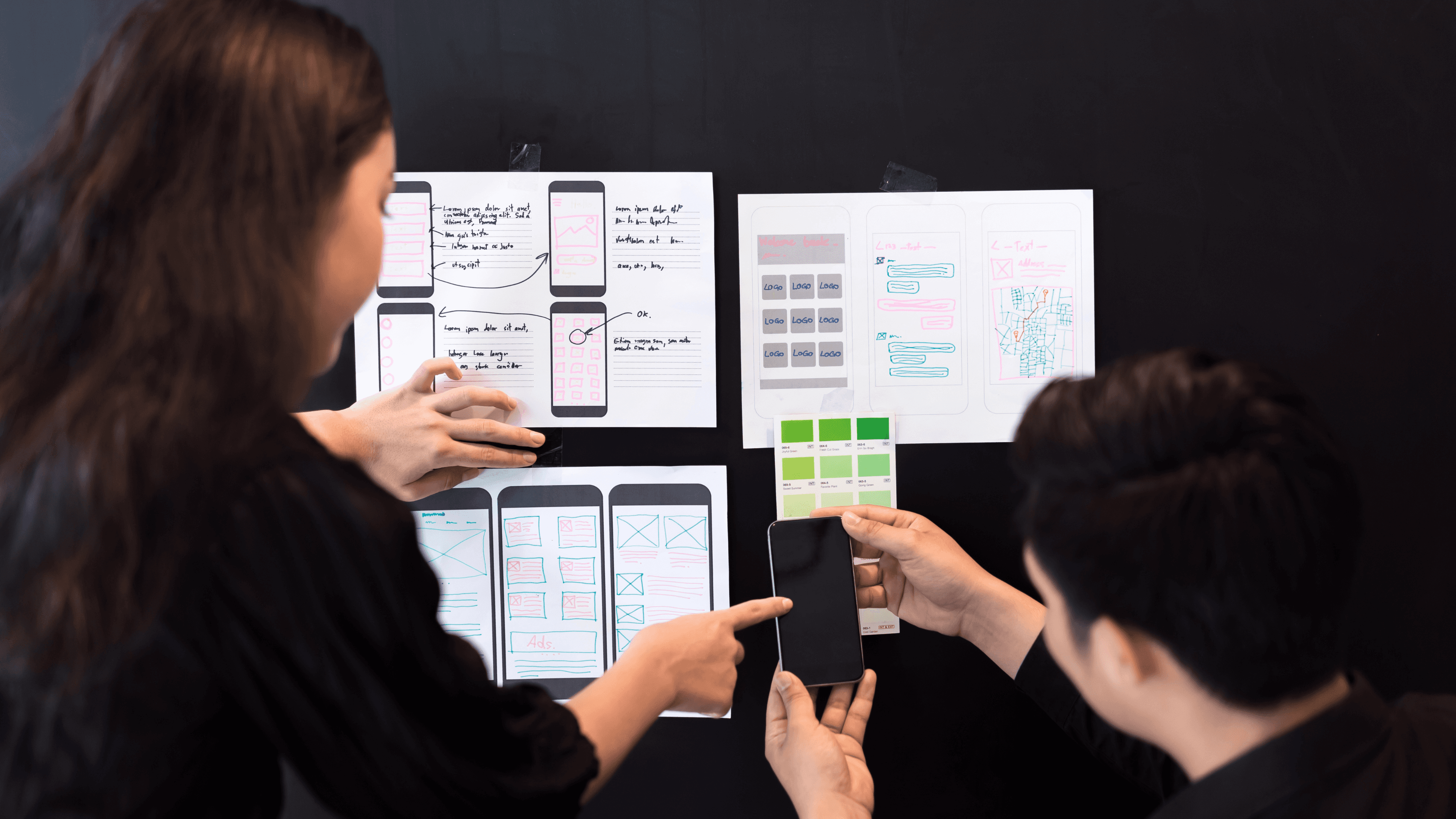
In 2026, the traditional "linear customer journey" is no longer the standard, it is the exception.
For decades, digital strategy has been built around the "sales funnel," a rigid path that assumes every customer enters through your homepage and follows a controlled sequence toward a conversion. But in today's fragmented ecosystem, your customers don't follow a path; they inhabit a decentralized network of touchpoints.
They might discover your value proposition through an AI-generated summary, validate your technical capabilities on a community forum, and browse your documentation long before they ever see your "About Us" page. If your website is still a monolithic "funnel" designed for a single point of entry, you aren't just losing data, you are losing market share to more agile, modular competitors.
To thrive in 2026, you must stop managing a website and start architecting an Experience Platform.
The Reality of Modern Discovery
The traditional funnel was designed for a controlled environment. However, three major shifts have created a non-linear "chaos" that legacy architectures cannot support:
AI-Native Research: Tools like Perplexity, SearchGPT, and specialized LLMs provide deep technical awareness before a user ever lands on your domain.
Fragmented Entry Points: A user’s first interaction is now more likely to be a deep-linked support article, a developer API reference, or a social commerce page rather than a homepage.
Subconscious Trust Metrics: Performance is now a brand pillar. As established in modern UX standards, users associate even minor latency with a lack of organizational competence.
Defining the Experience Platform
Unlike a monolithic website, where content, design, and code are locked together, an Experience Platform is a modular, API-driven ecosystem. It is built on three technical pillars that are now prerequisites for growth:
1. Headless Infrastructure
By decoupling your backend (where data lives) from your frontend (where users interact), you gain the ability to push consistent data to any device. Whether a customer is using a mobile app, a web browser, or an embedded AI agent, they receive the same high-fidelity, synchronized experience.
2. Component-Driven Design
The era of the "static page" is over. In 2026, leading brands will use Atomic Design. Your platform is a library of pre-vetted, high-performance components. When your marketing team needs to launch a new campaign or pivot to a new market, they aren't waiting for a full development cycle; they are reassembling existing blocks to create new experiences in hours.
3. Intelligence-at-the-Edge
Experience Platforms use Edge Computing to process user signals closer to their physical location. This allows the platform to dynamically swap components, such as a specific industry case study or regional pricing, before the page even finishes rendering. The result is a personalized experience that feels instantaneous.
The New Role of Staff Augmentation: Building the Pods
This shift from "site" to "platform" requires a fusion of marketing logic and engineering precision. This is where the old model of staff augmentation, hiring individual "coders", fails to deliver value.
At Blue People, we specialize in providing integrated Solution Teams, pods of experts who understand:
API Orchestration: Ensuring your entire tech stack communicates without latency.
Frontend Excellence: Mastering frameworks like Next.js and React to deliver the performance modern users demand.
Security-by-Design: Protecting a decentralized perimeter where every API is a critical touchpoint.
Strategize for the Network, Not the Path
The "funnel" was a comfort for an era of limited choices. In the chaos of 2026, your website must be as dynamic as the customers it serves. Transitioning to a modular Experience Platform isn't just a technical upgrade; it is a strategic imperative to ensure your brand remains visible and consistent across a fragmented world.
Is your architecture ready for the 2026 shift?
Stop struggling with a rigid, legacy funnel and start building a platform designed for the non-linear customer. Let’s discuss how to transition your current stack into a modular, high-velocity Experience Platform.


